Garnet, the birthstone for January, signifies
eternal friendship and trust and is
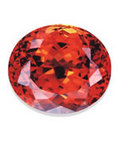 the perfect gift for a friend. Garnet,
derived from the word granatum, means seed, and is called so because of
the gemstone's resemblance to a pomegranate seed. References to the
gemstone dates back to 3100 B.C., when the Egyptians used garnets as inlays
jewelry. Garnet is the name of a group of minerals that comes in
a rainbow of colors, from the deep red of the pyrope garnet to the vibrant green
of tsavorites. Today, the most important sources for garnet are Africa,
Sri Lanka, and India.
the perfect gift for a friend. Garnet,
derived from the word granatum, means seed, and is called so because of
the gemstone's resemblance to a pomegranate seed. References to the
gemstone dates back to 3100 B.C., when the Egyptians used garnets as inlays
jewelry. Garnet is the name of a group of minerals that comes in
a rainbow of colors, from the deep red of the pyrope garnet to the vibrant green
of tsavorites. Today, the most important sources for garnet are Africa,
Sri Lanka, and India.
February
Amethyst, the gemstone believed by ancient Greeks
and Romans to
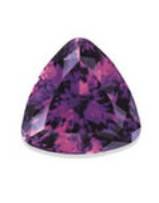 ward off the intoxicating powers of Bacchus, also is said
to keep the wearer clear-headed and quick-witted. Throughout history, the
gemstone has been associated with many myths, legends, religions, and numerous
cultures. English regalia were even decorated with amethysts during the
Middle Ages to symbolize royalty. It has been associated with many myths,
legends, religions, and numerous cultures. Amethyst is purple quartz, a
beautiful blend of violet and red that can found in every corner of the earth.
Historically, the finest amethyst were found in Russia and
were featured in much royal European jewelry. Today, while Brazil is the
primary source of this gemstone, fine material can be found elsewhere,
especially in Zambia.
ward off the intoxicating powers of Bacchus, also is said
to keep the wearer clear-headed and quick-witted. Throughout history, the
gemstone has been associated with many myths, legends, religions, and numerous
cultures. English regalia were even decorated with amethysts during the
Middle Ages to symbolize royalty. It has been associated with many myths,
legends, religions, and numerous cultures. Amethyst is purple quartz, a
beautiful blend of violet and red that can found in every corner of the earth.
Historically, the finest amethyst were found in Russia and
were featured in much royal European jewelry. Today, while Brazil is the
primary source of this gemstone, fine material can be found elsewhere,
especially in Zambia.
March
Aquamarine - The two birthstones for March are aquamarine and
bloodstone.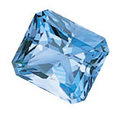 aquamarine is derived from the
Latin word aqua, meaning water, and marina, meaning the
sea. This gemstone was believed to protect sailors, as well as to
guarantee a safe voyage. The serene color of aquamarine is said to cool
the temper, allowing the wearer to remain calm and levelheaded. Its
pale, cool color beautifully complements spring and summer wardrobes.
Aquamarine is most often light in tone and ranges from greenish blue to
blue-green; the color usually is more intense in larger stones. This
gemstone is mined mainly in Brazil, but also is found in Nigeria,
Madagascar, Zambia, Pakistan, and Mozambique.
aquamarine is derived from the
Latin word aqua, meaning water, and marina, meaning the
sea. This gemstone was believed to protect sailors, as well as to
guarantee a safe voyage. The serene color of aquamarine is said to cool
the temper, allowing the wearer to remain calm and levelheaded. Its
pale, cool color beautifully complements spring and summer wardrobes.
Aquamarine is most often light in tone and ranges from greenish blue to
blue-green; the color usually is more intense in larger stones. This
gemstone is mined mainly in Brazil, but also is found in Nigeria,
Madagascar, Zambia, Pakistan, and Mozambique.
Bloodstone - The second birthstone for March is bloodstone,
a dark-green jasper flecked with vivid red 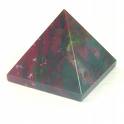 spots of iron oxide. This
ancient stone was used by the Babylonians to make seals and amulets and was
believed to have healing powers — especially for blood disorders. It is
sometimes called the martyr's stone as legend tells that it was created
when drops of Christ's blood stained some jasper at the foot of the cross.
Generally found embedded in rocks or in riverbeds as pebbles, primary sources
for this stone are India, Brazil, and Australia.
spots of iron oxide. This
ancient stone was used by the Babylonians to make seals and amulets and was
believed to have healing powers — especially for blood disorders. It is
sometimes called the martyr's stone as legend tells that it was created
when drops of Christ's blood stained some jasper at the foot of the cross.
Generally found embedded in rocks or in riverbeds as pebbles, primary sources
for this stone are India, Brazil, and Australia.
April
As the April birthstone, diamonds are the ideal
gift for a loved one. And now you
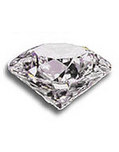 have more choices than ever. Get
creative and give the ultimate gift of beauty: a fancy-color diamond.
Fancy-color diamonds are natural, rare and truly exotic gem of the earth.
Diamonds in hues of yellow, red, pink, blue, and green range in intensity from
faint to vivid and generally the more saturated the color, the higher the
value. In fact, diamonds sparkling with intense color are rare and may
be priced higher than a colorless diamond of equal size. Because
fancy-color diamonds are very desirable, color is sometimes introduced in a
laboratory. These are correctly called color-treated diamonds. When
purchasing a fancy-color diamond, the shopper should ask if any enhancements or
treatments were used to improve its color and/or clarity.
have more choices than ever. Get
creative and give the ultimate gift of beauty: a fancy-color diamond.
Fancy-color diamonds are natural, rare and truly exotic gem of the earth.
Diamonds in hues of yellow, red, pink, blue, and green range in intensity from
faint to vivid and generally the more saturated the color, the higher the
value. In fact, diamonds sparkling with intense color are rare and may
be priced higher than a colorless diamond of equal size. Because
fancy-color diamonds are very desirable, color is sometimes introduced in a
laboratory. These are correctly called color-treated diamonds. When
purchasing a fancy-color diamond, the shopper should ask if any enhancements or
treatments were used to improve its color and/or clarity.
May As the birthstone for May, the emerald, a symbol of
rebirth, is believed to grant the
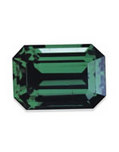 owner foresight, good fortune, and youth.
Emerald, derived from the word smaragdus, meaning green in
Greek, was mined in Egypt as early as 330 B.C. Today, most of the world’s
emeralds are mined in Colombia, Brazil, Afghanistan, and Zambia. The
availability of high-quality emerald is limited; consequently, treatments to
improve clarity are performed regularly.
owner foresight, good fortune, and youth.
Emerald, derived from the word smaragdus, meaning green in
Greek, was mined in Egypt as early as 330 B.C. Today, most of the world’s
emeralds are mined in Colombia, Brazil, Afghanistan, and Zambia. The
availability of high-quality emerald is limited; consequently, treatments to
improve clarity are performed regularly.
June
June counts three gems as birthstones, pearl,
Alexandrite, and moonstone.
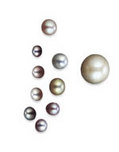 favorite gem materials of the Roman
Empire; later in Tudor England, the 1500s were known as the pearl age.
Pearls are unique as they are the only gems from living sea creatures and require
no faceting or polishing to reveal their natural beauty. In the
early 1900s, the first successful commercial culturing of round saltwater pearls
began. Since the 1920s, cultured pearls have almost completely replaced natural
pearls in the market.
favorite gem materials of the Roman
Empire; later in Tudor England, the 1500s were known as the pearl age.
Pearls are unique as they are the only gems from living sea creatures and require
no faceting or polishing to reveal their natural beauty. In the
early 1900s, the first successful commercial culturing of round saltwater pearls
began. Since the 1920s, cultured pearls have almost completely replaced natural
pearls in the market.
Alexandrite
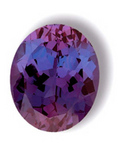 1831 during the reign of its namesake, Czar
Alexander II, and is an extremely rare chrysoberyl with chameleon-like
qualities. Its color is a lovely green in both daylight and fluorescent
light; it changes color to a purplish red in incandescent light. Due to
its rarity, some jewelers stock synthetic versions of this enchanting gemstone.
(Synthetic gemstones are man-made alternatives to the natural material,
possessing the same physical, optical, and chemical properties as the natural
gemstone.)
1831 during the reign of its namesake, Czar
Alexander II, and is an extremely rare chrysoberyl with chameleon-like
qualities. Its color is a lovely green in both daylight and fluorescent
light; it changes color to a purplish red in incandescent light. Due to
its rarity, some jewelers stock synthetic versions of this enchanting gemstone.
(Synthetic gemstones are man-made alternatives to the natural material,
possessing the same physical, optical, and chemical properties as the natural
gemstone.)
Moonstone - The third birthstone for June is the Moonstone.
It was given its name by 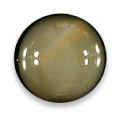 the Roman natural historian Pliny, who wrote that
moonstone's appearance altered with the phases of the moon — a belief that
held until well after the sixteenth century. A phenomenal gemstone,
moonstones show a floating play of light (called adularescence) and
sometimes show either a multirayed star or a cat's eye. Considered a sacred
stone in India, moonstones often are displayed on a background of yellow (a
sacred color) and are believed to encapsulate within the stone a spirit whose
purpose is to bring good fortune. Part of the family of minerals called feldspar,
moonstone occurs in many igneous and metamorphic rocks and comes in a variety of
colors such as green, blue, peach, and champagne. The most prized moonstones are
from Sri Lanka; India, Australia, the United States, Mayanmar, and Madagascar
are also sources.
the Roman natural historian Pliny, who wrote that
moonstone's appearance altered with the phases of the moon — a belief that
held until well after the sixteenth century. A phenomenal gemstone,
moonstones show a floating play of light (called adularescence) and
sometimes show either a multirayed star or a cat's eye. Considered a sacred
stone in India, moonstones often are displayed on a background of yellow (a
sacred color) and are believed to encapsulate within the stone a spirit whose
purpose is to bring good fortune. Part of the family of minerals called feldspar,
moonstone occurs in many igneous and metamorphic rocks and comes in a variety of
colors such as green, blue, peach, and champagne. The most prized moonstones are
from Sri Lanka; India, Australia, the United States, Mayanmar, and Madagascar
are also sources.
July There’s no better way to demonstrate your love
than by giving a ruby in celebration of
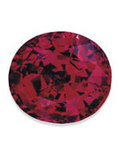 a July birthday. Rubies arouse the
senses, stir the imagination, and are said to guarantee health, wisdom, wealth
and success in love. Ruby is a variety of the gems species corundum. It
is harder than any natural gemstone except diamond, which means a ruby is
durable enough for everyday wear. Fine-quality ruby is extremely rare, and the
color of the gem is most important to its value. The most prized color
is a medium or medium dark vivid red or slightly purplish red. If the gem is too
light or has too much purple or orange, it will be called a fancy-color
sapphire.
a July birthday. Rubies arouse the
senses, stir the imagination, and are said to guarantee health, wisdom, wealth
and success in love. Ruby is a variety of the gems species corundum. It
is harder than any natural gemstone except diamond, which means a ruby is
durable enough for everyday wear. Fine-quality ruby is extremely rare, and the
color of the gem is most important to its value. The most prized color
is a medium or medium dark vivid red or slightly purplish red. If the gem is too
light or has too much purple or orange, it will be called a fancy-color
sapphire.
August Two birthstones are available for August birthdays:
Peridot and Sardonyx.
Peridot is
said to host magical powers and healing properties to protect against
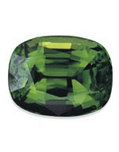 nightmares
and to bring the wearer power, influence, and a wonderful year. As peridot
is a gemstone that forms deep inside the Earth and brought to the surface by
volcanoes, in Hawaii, peridot symbolizes the tears of Pele, the goddess of fire
and volcanoes. Today, most of the peridot supply comes from Arizona; other
sources are China, Myanmar, and Pakistan. This gemstone comes in several
color variations ranging from yellowish green to brown, but most consumers are
attracted to the bright lime greens and olive greens. Peridot, in smaller
sizes, often is used in beaded necklaces and bracelets.
nightmares
and to bring the wearer power, influence, and a wonderful year. As peridot
is a gemstone that forms deep inside the Earth and brought to the surface by
volcanoes, in Hawaii, peridot symbolizes the tears of Pele, the goddess of fire
and volcanoes. Today, most of the peridot supply comes from Arizona; other
sources are China, Myanmar, and Pakistan. This gemstone comes in several
color variations ranging from yellowish green to brown, but most consumers are
attracted to the bright lime greens and olive greens. Peridot, in smaller
sizes, often is used in beaded necklaces and bracelets.
Sardonyx
is a form of onyx and is recognized by its layers of reddish brown and white 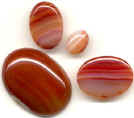 banding. It was popular with the ancient Greeks and Romans who carried
into battle talismans of sardonyx engraved with images of heroes such as Mars or
Hercules, believing that this would bring courage and victory. Because of
its attractive banding, sardonyx has long been used to fashion cameos (carved
raised figures) and intaglios (the reverse of cameos). This gemstone is
found throughout the world. The most attractive specimens are found in
India, but material also is mined in Czechoslovakia, Brazil, Uruguay,
Germany, and in the United States.
banding. It was popular with the ancient Greeks and Romans who carried
into battle talismans of sardonyx engraved with images of heroes such as Mars or
Hercules, believing that this would bring courage and victory. Because of
its attractive banding, sardonyx has long been used to fashion cameos (carved
raised figures) and intaglios (the reverse of cameos). This gemstone is
found throughout the world. The most attractive specimens are found in
India, but material also is mined in Czechoslovakia, Brazil, Uruguay,
Germany, and in the United States.
September
Sapphire,
the
September birthstone, has been popular since the Middle
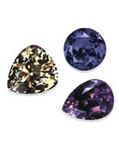 Ages and, according to
folklore, will protect your loved ones from envy and harm. Medieval clergy
wore sapphires to symbolize heaven, while commoners thought the gem attracted
heavenly blessings. Blue sapphires range from very light to very dark
greenish or violetish blue, as well as various shades of pure blue. The
most prized colors are a medium to medium dark blue or slightly violetish blue.
Sapphire is a variety of the gem species corundum and occurs in all colors of
the rainbow. Pink, purple, green, orange, or yellow corundum are
known by their color (pink sapphire, green sapphire). Ruby is the red
variety of corundum.
Ages and, according to
folklore, will protect your loved ones from envy and harm. Medieval clergy
wore sapphires to symbolize heaven, while commoners thought the gem attracted
heavenly blessings. Blue sapphires range from very light to very dark
greenish or violetish blue, as well as various shades of pure blue. The
most prized colors are a medium to medium dark blue or slightly violetish blue.
Sapphire is a variety of the gem species corundum and occurs in all colors of
the rainbow. Pink, purple, green, orange, or yellow corundum are
known by their color (pink sapphire, green sapphire). Ruby is the red
variety of corundum.
October
October is another month with two birthstone
choices – Tourmaline and Opal.
Tourmaline
has become a favorite gemstone among jewelry designer, and gem collectors the
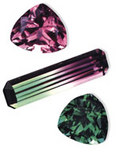 world over. Since it is available in a wide variety of colors, it is ideally
suited to almost anyone's taste. Tourmaline also is known for displaying
several colors in the same gemstone. These bi-color or tri-color
gems are formed in many combinations; gemstones with clear color
distinctions are highly prized. One multi-color variety is known as watermelon
tourmaline, and features green, pink, and white colors bands; to
resemble its namesake, the gemstone is cut into thin slices having a pink
center, white ring, and green edge. Tourmaline is found in many
localities including Brazil, Afghanistan, East Africa, and the USA.
world over. Since it is available in a wide variety of colors, it is ideally
suited to almost anyone's taste. Tourmaline also is known for displaying
several colors in the same gemstone. These bi-color or tri-color
gems are formed in many combinations; gemstones with clear color
distinctions are highly prized. One multi-color variety is known as watermelon
tourmaline, and features green, pink, and white colors bands; to
resemble its namesake, the gemstone is cut into thin slices having a pink
center, white ring, and green edge. Tourmaline is found in many
localities including Brazil, Afghanistan, East Africa, and the USA.
Opal - The name opal derives from the Greek Opallos,
meaning "to see a change (of color)." Opals
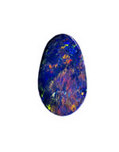 range in color from
milky white to black with flashes of yellow, orange, green, red, and blue. An
opal's beauty is the product of contrast between its color play and its
background. Opal is a formation of non-crystalline silica gel that seeped
into crevices in the sedimentary strata. Through time and nature's heating and
molding processes, the gel hardened into the form of opals. The opal is composed
of particles closely packed in spherical arrangements. When packed together in a
regular pattern, a three-dimensional array of spaces are created that give opal
its radiance.
range in color from
milky white to black with flashes of yellow, orange, green, red, and blue. An
opal's beauty is the product of contrast between its color play and its
background. Opal is a formation of non-crystalline silica gel that seeped
into crevices in the sedimentary strata. Through time and nature's heating and
molding processes, the gel hardened into the form of opals. The opal is composed
of particles closely packed in spherical arrangements. When packed together in a
regular pattern, a three-dimensional array of spaces are created that give opal
its radiance.
November
-Topaz and Citrine
|
Two gems are appropriate for November birthdays - Topaz
and Citrine.
Two gems are appropriate for November birthdays - Topaz and Citrine.
Topaz is
a gemstone available in a rich rainbow of colors. Prized for several thousand
years in
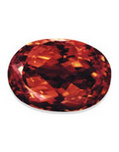 antiquity, all yellow gems in antiquity were called topaz.
Often confused with citrine quartz (yellow) and smoky quartz (brown),
quartz and topaz are separate and unrelated mineral species. The most prized
color of topaz is called Imperial topaz after the Russian Czars of the
1800s and features a magnificent orange body color with pinkish undertones.
Topaz also comes in yellow, pink, purple, orange, and the many popular blue
tones.
antiquity, all yellow gems in antiquity were called topaz.
Often confused with citrine quartz (yellow) and smoky quartz (brown),
quartz and topaz are separate and unrelated mineral species. The most prized
color of topaz is called Imperial topaz after the Russian Czars of the
1800s and features a magnificent orange body color with pinkish undertones.
Topaz also comes in yellow, pink, purple, orange, and the many popular blue
tones.
Citrine, the other birthstone for November is known
as the "healing
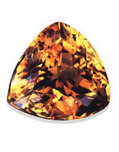 quartz". This golden gemstone is said to support
vitality and health while encouraging and guiding hope, energy and warmth within
the wearer. Citrine can be found in a variety of shades ranging from pastel
yellow to dark brownish orange. It is one of the most affordable of
gemstones and plentiful in nature. Citrine is found most frequently in Brazil,
Bolivia, and Spain.
quartz". This golden gemstone is said to support
vitality and health while encouraging and guiding hope, energy and warmth within
the wearer. Citrine can be found in a variety of shades ranging from pastel
yellow to dark brownish orange. It is one of the most affordable of
gemstones and plentiful in nature. Citrine is found most frequently in Brazil,
Bolivia, and Spain.
December
The three birthstones associated with December are Tanzanite,
Zircon, and Turquoise.
Zircon
- Derived from the Arabic words zar and gun,
meaning gold and color, zircon is 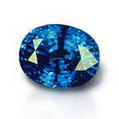 found in a wide range
of colors such as: blue, yellow, orange, brown, green, colorless, and red
(the most prized color). For many years colorless zircon was used to imitate
diamonds. Folk wisdom grants zircon the power to relieve pain, whet the
appetite, protect travelers from disease and injury, to ensure a warm welcome,
and to prevent nightmares guaranteeing a deep, tranquil sleep. Major
sources of zircon are the Chanthaburi area of Thailand, the Palin area of
Cambodia, and the southern part of Vietnam.
found in a wide range
of colors such as: blue, yellow, orange, brown, green, colorless, and red
(the most prized color). For many years colorless zircon was used to imitate
diamonds. Folk wisdom grants zircon the power to relieve pain, whet the
appetite, protect travelers from disease and injury, to ensure a warm welcome,
and to prevent nightmares guaranteeing a deep, tranquil sleep. Major
sources of zircon are the Chanthaburi area of Thailand, the Palin area of
Cambodia, and the southern part of Vietnam.
Turquoise  -
The name turquoise, from the French
expression Pierre tourques or Turkish stone,
originated in the thirteenth century and describes one of the oldest known gemstones. Turquoise
varies in color from greenish blue, through robin's egg-blue, to sky
blue shades and its transparency ranges from translucent to
opaque. Turquoise is plentiful and is available in a wide range of sizes. It is
most often used for beads, cabochons, carvings, and inlays. Although its
popularity fluctuates in fashion, it is a perennial favorite in the American
Southwest.
-
The name turquoise, from the French
expression Pierre tourques or Turkish stone,
originated in the thirteenth century and describes one of the oldest known gemstones. Turquoise
varies in color from greenish blue, through robin's egg-blue, to sky
blue shades and its transparency ranges from translucent to
opaque. Turquoise is plentiful and is available in a wide range of sizes. It is
most often used for beads, cabochons, carvings, and inlays. Although its
popularity fluctuates in fashion, it is a perennial favorite in the American
Southwest.
Tanzanite
- Discovered in the late 1960s in Tanzania, and found
exclusively in this tiny area 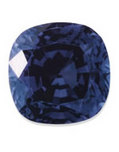 of the world, tanzanite exhibits a rich
violet-blue color for which the gemstone is treasured; often it is heat-treated
to achieve this color. Colors range from blue to purple, and tanzanites
that are medium dark in tone, vivid in saturation, and slightly violet blue
command premium prices. As tanzanite can be less expensive than sapphire,
it often was purchased as an alternative. However, it has increased
in popularity and now is valued more for its own beauty and brilliance than as a
sapphire substitute.
of the world, tanzanite exhibits a rich
violet-blue color for which the gemstone is treasured; often it is heat-treated
to achieve this color. Colors range from blue to purple, and tanzanites
that are medium dark in tone, vivid in saturation, and slightly violet blue
command premium prices. As tanzanite can be less expensive than sapphire,
it often was purchased as an alternative. However, it has increased
in popularity and now is valued more for its own beauty and brilliance than as a
sapphire substitute.