

 Tasaki Pearns
Types of Pearls
Akoya - Akoya Pearls are found only in Japan, China, and Vietnam. Japanese Akoya pearl farms are shifting towards the warmer Chinese waters, where these pearls take only half as long to grow. Overtone colors of Akoya pearls include white, cream, rose, silver, and green. Akoya pearl sizes range from less than 5mm to 9mm. Larger Akoya pearl sizes are possible, but less frequent. Akoya pearls are known for their lovely orient and warm color. They rarely grow more than 9 mm in size.
Biwa - A fresh water pearl cultivated in a mollusk only in Japan's Lake Biwa. Smoother and more lustrous than fresh water pearls from China.
Burmese - Large cultured pearls (10 mm and larger) grown in large oysters off the coasts of Burma. Warmer in color tone than South Sea cultured pearls, rare and costly.
Cultured Pearls Made famous by Mikimoto, nearly all pearls sold on the open market are cultured.
Cultured pearls evolve in a similar manner as natural pearls, with the distinction being that cultured pearls have an irritant intentionally placed by a pearl farmer to start the formation of a pearl. The process may take one to several years. Japan, China and various places in the South Pacific have traditionally been major suppliers of cultured pearls. All pearls sold on this website are cultured pearls.
Fresh Water - Pearls cultivated in mollusks, not oysters, found in fresh water lakes and rivers. Fresh water pearls generally are elongated in shape and have a milky translucent appearance. Their wide range of interesting shapes and colors make up in fashion appeal for their relatively low value.
Japanese Vs Chinese Akoya Pearls - Japan is famous for its introduction and promotion of the cultured pearl. Unfortunately, pollution has devastated Japan's pearl harvests and has decreased the quality of their pearls.
China initially started culturing pearls in the 1980's and is now producing pearls of equal and sometimes higher quality than many of the pearls coming from Japan. Since the waters in China are less polluted and warmer, Chinese pearls have a thicker nacre and often a higher luster. Some Japanese firms have even started importing Chinese pearls and labeling them as Japanese pearls since it is more expensive to grow the pearls in Japan.
Keshi - Tiny pearls, some a little bigger than a grain of sand, which form naturally in many cultured pearl oysters.
Mabe - Large hemispherical cultured pearls grown against the inside shells of oysters instead of within the body. Less expensive than regular round cultured pearls and, because of their hemispherical shape, used mounted in such jewelry as earrings, rings and brooches. These are grown in Japan, China and the United States.
Natural Pearls (UNCULTURED) - These are the most rare form of a pearl. They form without human instigation. The process begins when an irritant positions itself inside the oyster. As a defensive measure, the oyster secrets layers of nacre which cover the irritant. This nacre forms the "pearl" as we know it. The amount, quality and shape of nacre that surrounds the irritant particle essentially determines the quality of the pearl. Because of their rarity and low demand, natural pearls can only be bought at estate auctions and through private dealers.
Saltwater Pearls - These are almost always Akoya pearls. (Akoya is the Japanese word for Saltwater) These pearls are farmed in saltwater and are always grown in oysters. Saltwater pearls typically command a higher price than their freshwater cousins.
South Sea - Large cultured pearls (10 mm and larger) grown in large oysters off the coasts of Australia. Usually silvery in appearance, and sometimes not as lustrous as fine Akoya pearls, South Sea pearls are rare and costly.
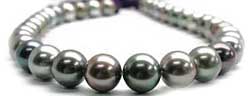
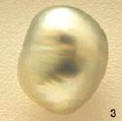
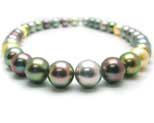
Tahiti Cultured Pearls - are pearl concretions that are secreted inside the black-lipped Pinctada Margaritifera species of pearl oysters cultivated mainly in the lagoons of French Polynesia. They consist of thick pearly layers containing organic substances and calcium carbonate in the form of aragonite.
In French Polynesia, the trade designation "Tahiti Cultured Pearl" is reserved exclusively for cultured pearls obtained from a grafting of the locally cultivated Pinctada Margaritifera, variety cumingi pearl oyster. Such pearls have a continuous pearly layer over at least 80% of their surface and do not reveal either the underlying nucleus.French Polynesia Official Classification: Tahiti Cultured Pearls are classified according to their diameter, luster, shape, surface purity and color.
Lengths and terminology:
Choker - 14" to 15" in length. Should nestle around the base of the neck.
Princess - 18" in length. Halfway between choker and matinee length.
Matinee - 22" to 23" in length. Should fall to the top of the cleavage.
Opera - 30" to 36" in length. Should fall to the breastbone.
Sautoir or Rope - Any pearl necklace longer than opera length
Dog Collar - Multiple strands of pearls fitting closely around the neck.
Bib - Multiple strands of pearls, each shorter than the one below, nested together in one necklace.
Graduated - A necklace composed of pearls which taper downward in size from large pearls in the center.
Uniform - A necklace which appears to be composed entirely of pearls of the same size, though there generally is a slight difference in size between the center and the end pearls for a more proportionate look.
When selecting a strand of cultured pearls, it’s best to buy them from a knowledgeable jeweler. Your local jeweler can explain how to make the most of your purchase and insure that you are getting the best quality pearls within your price range.
|
|
|
|
|
|
|
|
|
|


You can evaluate any piece of cultured pearl jewelry on the following quality factors. But always remember that the better the quality of pearls you select, the more beautiful and valued they will be over time.

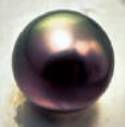
LUSTRE: Lustre is a combination of surface brilliance and a deep seated glow. The lustre of a good quality pearl should be bright and not dull. You should be able to see your own reflection clearly on the surface of a pearl. Any pearl that appears too white, dull or chalky indicates low quality.

SURFACE: Cleanliness refers to the absence of disfiguring spots, bumps or cracks on the surface of a pearl. The cleaner the surface of the pearl, the more valuable.

SHAPE: Since cultured pearls are grown by oysters in nature, it is very rare to find a perfectly round pearl. However, the rounder the pearl, the more valuable it is. Baroque pearls, which are asymmetrical in shape, can be lustrous and appealing, and often cost less than round pearls.

COLOR: Cultured pearls come in a variety of colors from rosé to black. While the color of a pearl is really a matter of the wearer’s preference, usually rosé or silver/white pearls tend to look best on fair skins while cream and gold toned pearls are flattering to darker complexions.

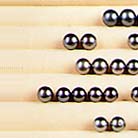
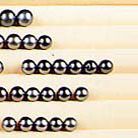
SIZE: Cultured pearls are measured by their diameter in millimeters. They can be smaller than one millimeter in the case of tiny seed pearls, or as large as twenty millimeters for a big South Sea pearl. The larger the pearl, other factors being equal, the more valuable it will be. The average sized pearl sold today is between 7 and 7-1/2 millimeters.
|
Tahiti Cultured Pearls |
|
|
French
Polynesia Official Classification Diameter
Luster
Shape
Quality Nacre
Thickness Surface
|
|